
Aquarium Antibacterials
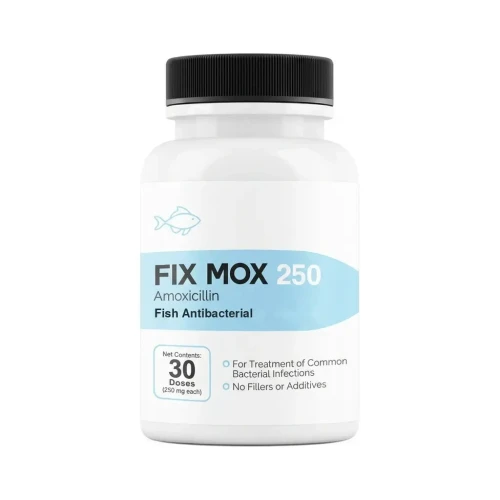


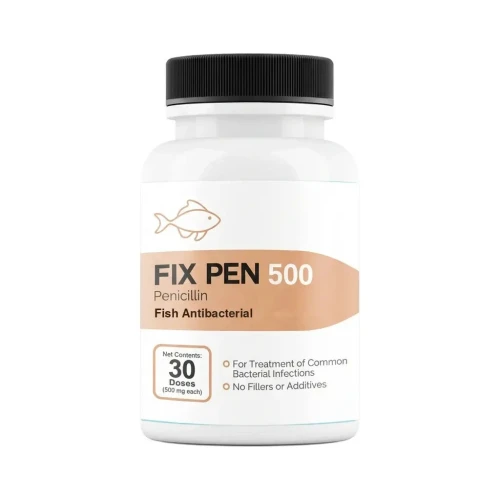


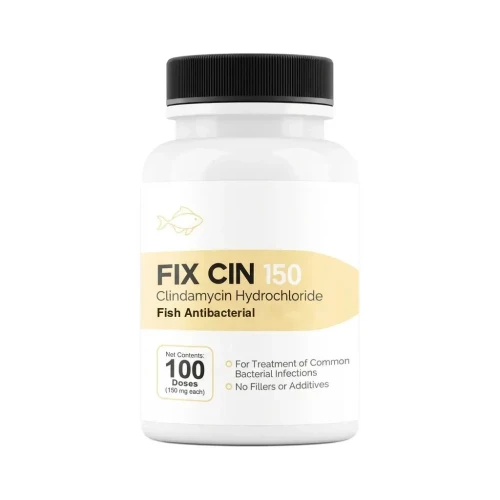

Aquarium antibacterials for freshwater and saltwater fish tanks, all from the Aqua Soma Labs Fix line. Each one is dosed by the water you treat, once a day, and each product page has a dosing chart by tank size.
The right choice depends on which bacteria are most likely involved. Gram-positive bacteria usually cause milder fin rot and wound infections. Gram-negative bacteria are behind most fast, deep ulcers and columnaris-type patches. Use this table to narrow it down, then open the product for the full label dose.
| Treatment | Class | Mainly acts on | Common use |
|---|---|---|---|
| Fish Mox | Penicillin type | Gram-positive, some gram-negative | Broad first choice for fin rot and sores |
| Fish Pen | Penicillin V | Gram-positive | Early fin rot, infected wounds |
| Fish Flex | Cephalosporin | Gram-positive, some gram-negative | Skin ulcers and wounds |
| Fish Cin | Lincosamide | Gram-positive and anaerobes | Deep wounds and abscesses |
| Fish Doxy | Tetracycline | Broad | Gill infections, relapsing fin rot |
| Fish Zithro | Macrolide | Broad | Columnaris-type and gill infections, 5 to 7 day course |
| Fish Flox | Fluoroquinolone | Gram-negative | Aggressive ulcers and fin rot |
| Fish Sulfa Forte | Sulfonamide combination | Gram-negative and gram-positive | Ulcers and columnaris-type cases in large tanks |
| Fish Zole | Nitroimidazole | Protozoan flagellates and anaerobes | Hole-in-the-head, Hexamita, wasting |
Antibacterials don't treat ich, velvet, flukes, or fungus, so rule those out first. Not sure where to start? Use the symptom finder on our fish antibacterials page.